No One Sees Your Daily Battle: Surviving Bias
Other people’s judgements can become scripts that shape how we see ourselves. What does it take to see beyond them?


For some of us, other people's judgement begins before we've even had a chance to show them who we are.
Sometimes, at first sight, people don’t like you. Their eyes slide past you. Their smiles stop short. When you are in school, other kids’ mistakes earn chuckles or soft reminders. Yours earn sharp inhales and narrowed eyes. You trip in gym class, and laughter follows you for weeks. You cross the street. Cars speed up. They want you gone.
The First Lessons of Judgement
For some, the lesson is harsher at home. A single wrong word or a spilt drink snaps the air in half. A slap. A belt. A door slams hard enough to say, ‘You are the problem.’ No apology follows, just: “That’s what you get.” “That’s how life works.” Or worse, silence. You swallow the blame. There is nowhere else for it to go.
When a teacher beams at the right answer, or your parent’s face hardens at the wrong tone of voice, a lesson is formed: Some things are right and some are wrong. By adolescence, you observe the rules of “rightness.” If something is praised, it’s right; If society says it is wrong, it is. We see through the lens of our peers because they taught us how to see in the first place. What society thinks is correct. As a society, we apply ‘worth’ to things.
So, you watch people, celebrities, important people, rich people, happy people, noticing how a single glance defines ‘cool.’
You practice the same tilt. You consider everything for effect: the casual way you sit on a chair, the brightness of your CV headline. You smile with your mouth closed. You monitor your laugh for volume and timing. You rehearse your greetings.
Heuristics and the Economy of Mind
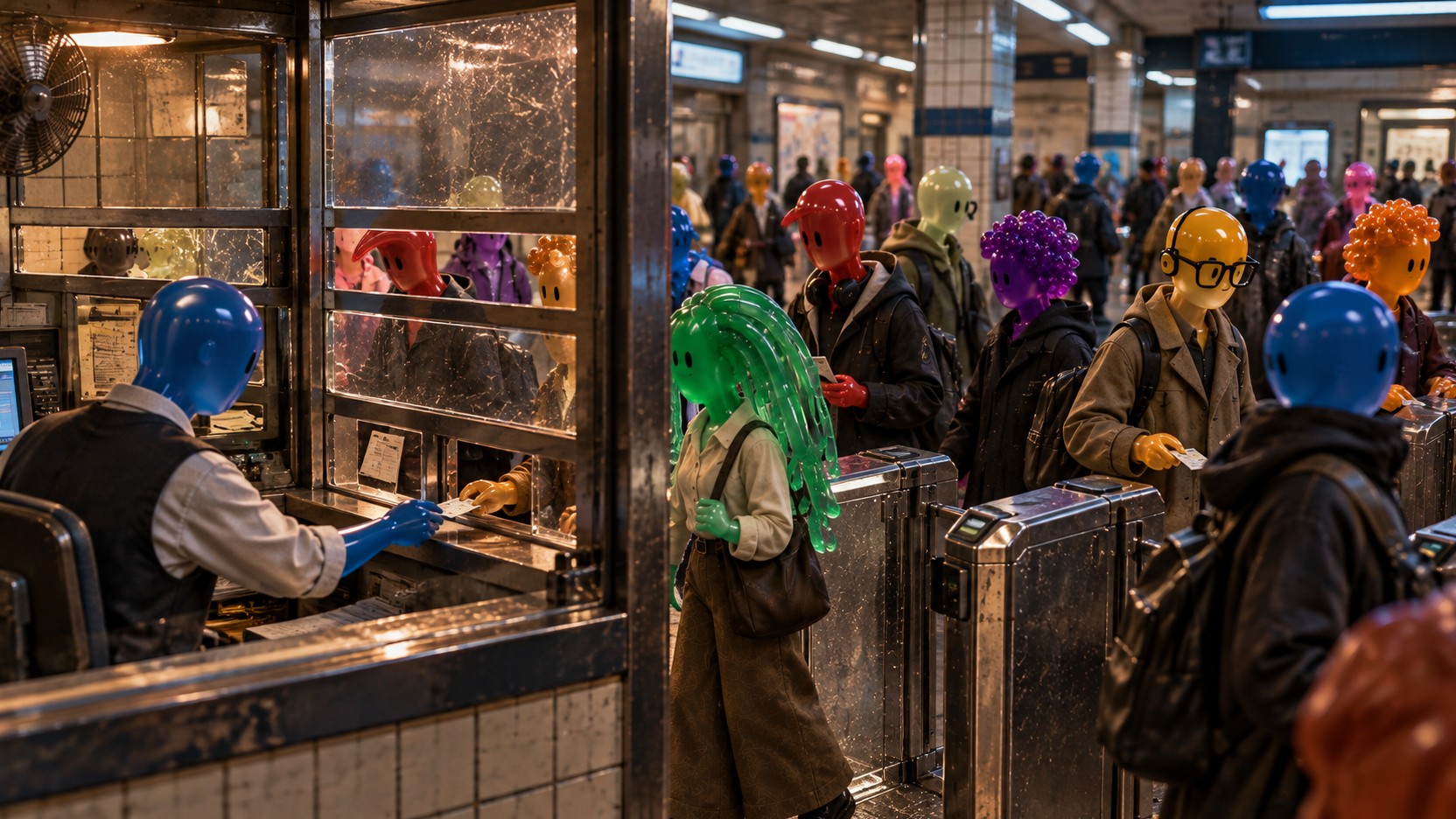
Media, advertising and peers constantly compete to tell us what is worth paying attention to, and who to be. But there is more information than anyone can assess closely. No one can keep up with every claim, image and cue.
So the mind adapts. To survive the flood, it does something brilliant: it simplifies. Our brains cut corners—using heuristics. Heuristics are adaptive, experience-based mental shortcuts—fast and efficient strategies that simplify decision-making. Rather than analysing every detail and calculating every possibility, the mind leans on familiar cues and patterns, which reduces cognitive load.
They’re not always accurate, but they’re mostly functional. If something feels true, it often becomes true enough to act on. It’s efficient. Necessary, even.
Heuristics are an evolutionary product, but in the modern world, they often struggle to keep pace with the complexity and velocity of information. They fail to account for the second-hand distortions introduced by media and peer interference. Shortcuts compress data. They erase nuance. They help us make quick decisions in complex environments, but they trade precision for speed.
Bias can arise when we rely on mental shortcuts too confidently. Cognitive bias describes recurring patterns in how judgement or decision-making can depart from a fuller assessment of the evidence. It is not simply a failure to think; even useful shortcuts can favour familiar assumptions over what is actually in front of us. These patterns can shape how we interpret events, evaluate choices and form beliefs, sometimes without conscious awareness.
Scripts and Stereotypes
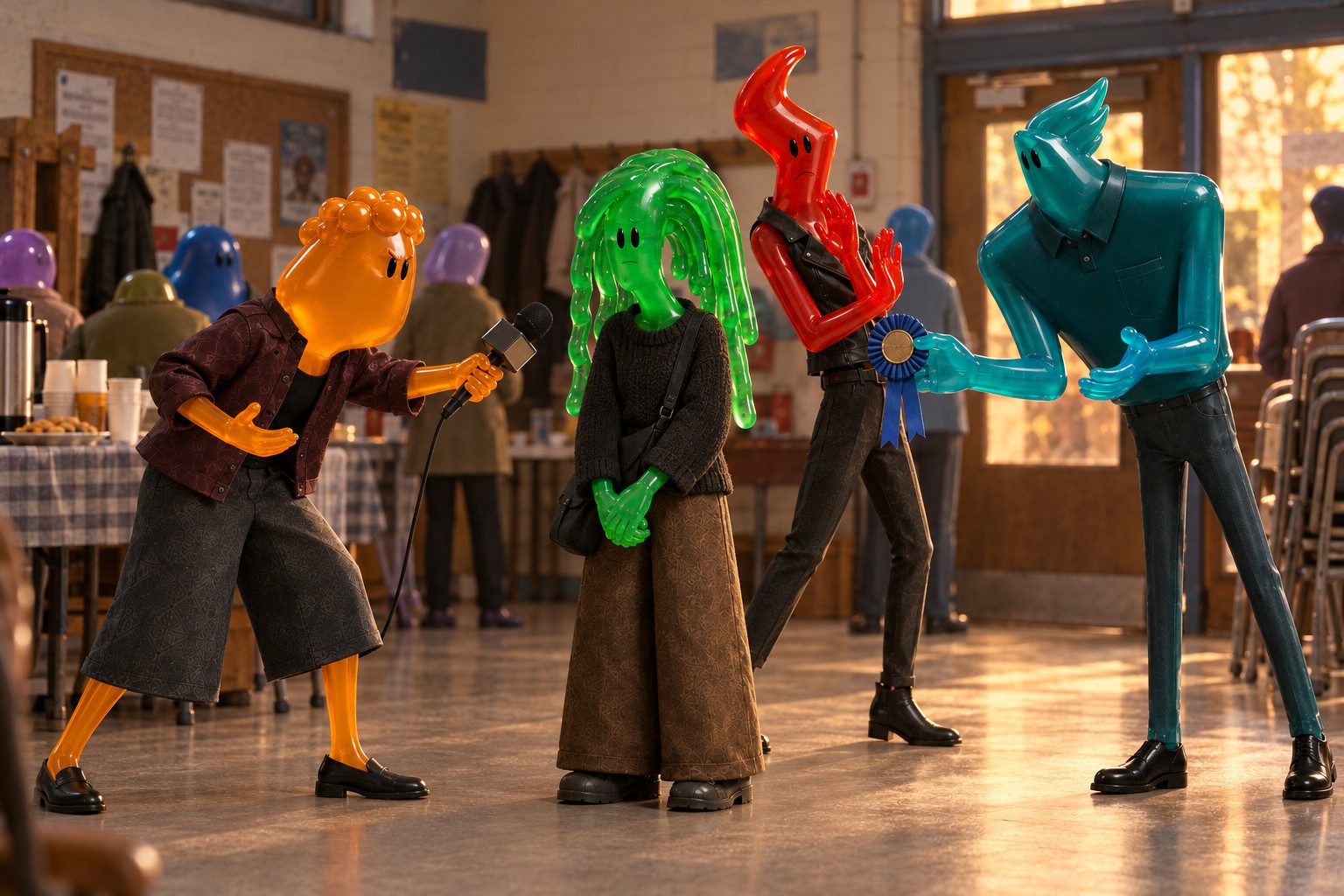
People don’t just form judgements. They form narratives—stories about the world, about others, about you. Complexity is too exhausting. Stereotypes reduce your complexity into something predictable.
Collective biases form when cognitive distortions converge across individuals and are reinforced through social dynamics.
As these patterns align, individual biases synchronise into group-level defaults, creating the appearance of consensus, even when grounded in distortion. Repeated enough, bias hardens. If enough people compress you the same way, what starts as suspicion is labelled instinct. What begins as a bias becomes truth. A distorted lens seen through so often it feels clear.
From the moment you enter public consciousness, you’re handed a script. For some, it’s loose. Flexible. Forgiving. For others, especially those marked by race, class, disability, or history, these narratives come laced with centuries of cognitive bias—deeply embedded shortcuts that flatten complexity into assumption.
When someone sees you, they don’t see you—they see the compressed version their mind can manage. Gender. Race. Body type. Voice. Posture. Accent. Clothes. That’s all it takes to form a belief. One that feels like knowledge.
Research on racialised perceptions of anger suggests that a Black man’s anger can be read as more threatening than a comparable expression by a white man. Under that pressure, three narrow roles can seem available:
Role 1: The Threat
Accept the narrative of threat and volatility—and use it as a weapon, risking backlash even as it suffocates you. This role is short-lived.
Role 2: The Prophet
Speak out against the false narrative, making yourself a larger target for judgment as you do so.
Role 3: The Token
Be the soft-spoken model of patience who contradicts the stereotype, suppressing genuine emotion. You try to control the narrative by burying the real you. Allowing it to slip away as sarcasm, silence, stoicism, or art. You anticipate the judgment. You brace. You adjust. You are silent.
For some Black men, even ordinary anger or grief can feel risky to show. The expectation of danger falls on the expression before anyone asks what caused it. Suppressing those feelings may feel safer, but it can also isolate you.
Over time, the effort of monitoring every response can become its own burden. Discriminatory treatment can cause psychological distress, while habitual emotional suppression may strain social connection. The performance becomes harder to sustain. Grief comes. Sometimes rage. But when the mask slips, it is you they blame, not the pressure they placed on you. Your pain is pathologised. Your grief is called dysfunction. Your exhaustion, laziness. The stereotype is reinforced: a “volatile” Black man who can’t manage his feelings.
The loop of erosion
Bias does not stop at the first judgement. When people repeatedly act on the same assumptions, those assumptions begin to shape how others respond and what choices feel available to them. The judgement and the response can start reinforcing each other. What began as a misreading becomes a cycle.
The Armour of Bias
For the judge, biases create the illusion of certainty and control, anchoring a fragile sense of self. People resist letting go of prejudices not because they’re unaware, but because in a world of overwhelming information, nuance feels dangerous. Letting go would mean admitting uncertainty—and vulnerability. For many, that’s simply too threatening.
Others need you to confirm their worldview. Your pain, your anger, your nuance—it threatens the story they’ve chosen to believe.
If you call out the falseness of the narrative, some people will resist revising it. You may be labelled “angry,” “ungrateful,” “paranoid,” or “self-pitying” rather than heard.
Society reacts negatively to parts of who you are, not because they’re wrong, but because they don’t fit the shortcut.
The Misalignment
And that’s the crux: they don’t know what it feels like to be you. They don’t live in your nervous system. They haven’t felt your specific traumas, your hungers, your rhythms, your joy.
Their advice might sound reasonable, but it’s built on assumptions that don’t fit your inner reality. They Don’t Know What You Need.
The Illusion of Moral Certainty
To truly justify a moral judgment, one would need to know the other person’s inner world—every wound, every hope, every fear—along with the arc of their personal growth and the broader systemic ripple effects of any choice.
To judge someone completely, you would have to be all-knowing.
But we’re not. So we lean on heuristics—fast, emotionally charged shortcuts that collapse complexity into snap verdicts.
We mistake those verdicts for truth, as if consensus alone could transform opinion into fact.
“If everyone agrees, it must be right,” we tell ourselves. But the voices we follow lack the depth to see the full picture.
That’s why their judgment feels so heavy. It’s not just that it hurts—it’s that it’s misaligned. Irrelevant. Built on fiction.
The Consequence of Consensus
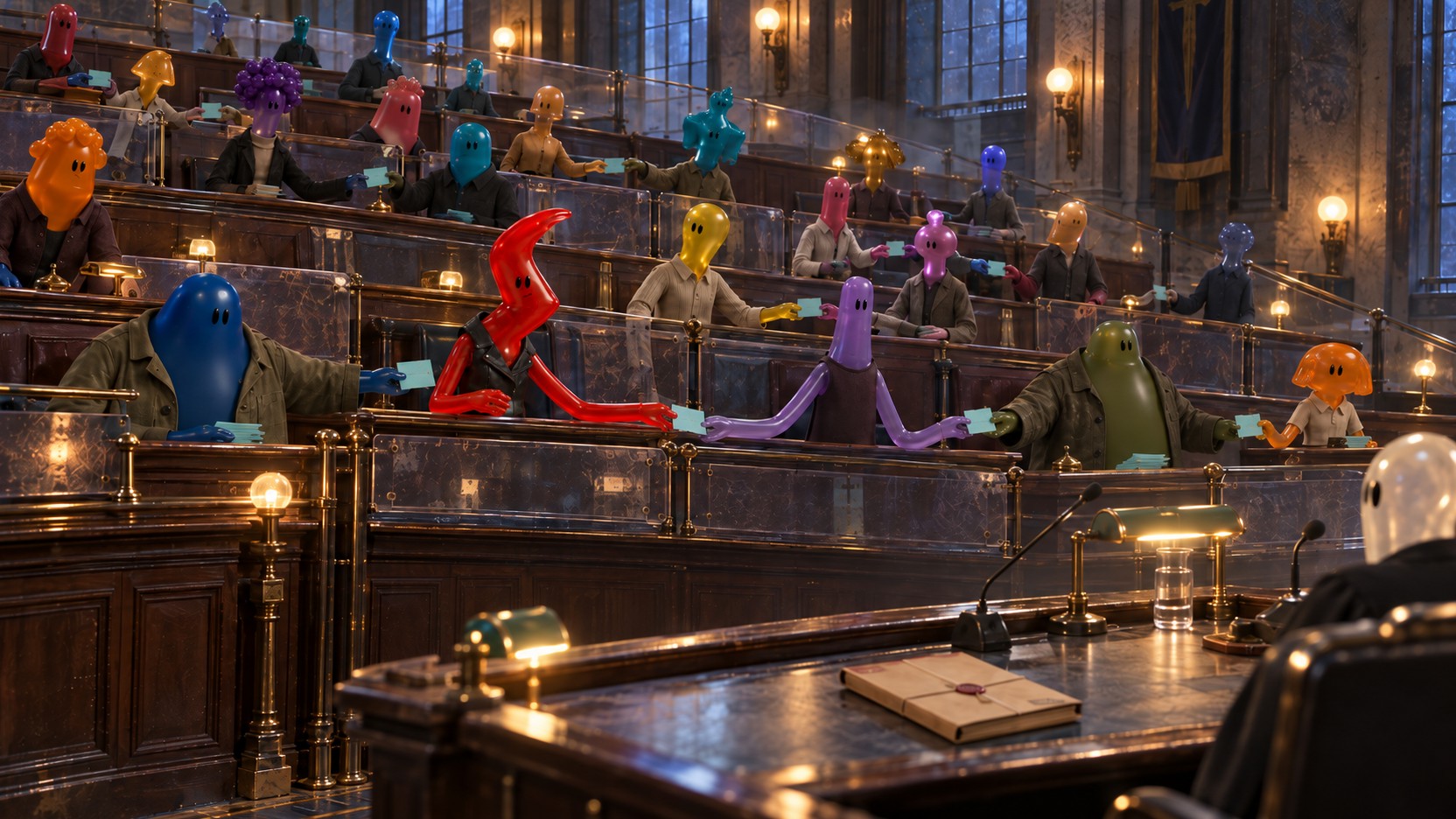
The agreement no longer reflects truth or purpose. It reflects fear.
Insight becomes a popularity contest. Independent thought withers, and the consensus itself becomes contaminated.
Far from strengthening social cohesion, coerced conformity fractures minds and communities. It reinforces power hierarchies through cognitive shortcuts that equate sameness with safety. Complexity becomes a threat; choice dissolves.
As we navigate by consensus, we inherit their projections. We inherit their fear.
Judgment distorts reality; it muddies the waters just when you need clean sight. You can’t think clearly when your survival depends on being seen the right way.
These external pressures don’t just guide behaviour; they rewrite self-perception, eroding the confidence needed to assert boundaries or explore new paths.
Research on discrimination has found that unfair treatment can cause psychological distress. The judgement does not have to be true to change the conditions in which someone thinks and acts.
Judgment flattens human experience into a caricature. When truth depends on consensus, doubt disappears—and with it, any need to think for yourself.
Discrimination and moral absolutism can stifle dissent and narrow the range of perspectives a group is willing to hear.
It’s a self-reinforcing cycle, one that inflicts real emotional harm and constrains growth in those already pushed to the margins.
The Maze of Survival
Whichever choice you make in response to judgment, you are not free.
The burden remains on you to navigate a maze built by someone else. A maze made of glass walls. And they’ll tell you it’s a straight road.
You negotiate a binary that was never yours, walking a tightrope where any misstep might cost you dignity, safety, belonging, opportunity, money, or time.
You respond. You adjust.
You try to survive within the limits someone else imagined for you.
But every adjustment you make in response to judgment becomes the next reason to judge you.
Bias compresses you into a role, and that role shapes how you behave.
Your behaviour, measured against a distorted expectation, “proves” the bias that confined you.
The result is a collective blindness—a sunken place of discontent and conflict.
Fog and Fracture: When Consensus Fails

Reality doesn’t follow scripts. People change. Circumstances evolve. Context matters.
Unanimity obscures the contours of reality like fog settling over a city. The road beneath disappears. You know the streets are still there, but you can’t find your footing.
When you make a mistake, consensus and rigid moral codes abandon you. When you collide, your heuristic system collapses under complexity’s pressure.
Judgment, once hailed as the beacon of right and wrong, reveals itself as a barrier to genuine understanding and growth.
You find yourself injured, uncertain, adrift in a fog of quiet disorientation, asking,
“What do I believe when the chorus is against me?”
In June 2024, in North London, producer Miles Clinton James was in a recording session when he received a phone call from Little Simz. He had known her for roughly a decade, but what he heard took him by surprise. He later recalled an emptiness in her voice; even over the phone, he could hear how tense she was.
Simz had spent years making music with a close collaborator, and that relationship had broken down. She had won a Mercury Prize, yet repeated attempts to make another album had stalled. She described having come to feel that without the familiar arrangement she might no longer be able to do what she did. She could not walk into a studio and pretend to have confidence she did not feel.
The chorus was not necessarily a crowd, or even a voice still speaking to her. A judgement can take hold long after the circumstances that gave it power have changed. For Simz, an expectation about the artist she was supposed to be had become difficult to separate from her own sense of what she could do. The question was how to find her way forward without accepting that expectation as the limit of what was possible.
Reclaiming the Unseen Self

After the call, Simz and Miles began working together. She had reached out to him because she knew he would be willing to try things, even without knowing what kind of album they might make. She wanted making music to feel like play again.
In the studio, they swapped instruments. Miles might take the guitar while Simz tried the drums or keyboards. They could follow a sound without expecting every session to produce a hit. Simz later said that freedom eased the pressure she had been putting on herself. She was still uncertain about the music, but she could begin making it.
Then there is silence—the kind that asks you to finally listen.
Heuristics and snap reactions can lose some of their grip when we learn to notice them.
You start to remember things you had buried: the way your voice used to sound. The rhythms of thought that felt like your own. The parts of you that needed no witness to feel real.
In that stillness, something sacred returns: sight. Not just being seen—but seeing. In that stillness, complexity reveals itself.
Solitude with your thoughts isn’t loneliness. Solitude is nourishment. It’s where understanding takes root. Clarity is an inner practice you can tend like a garden.
You begin to prune what was planted in fear. Letting go of judgment dissolves distortion. You don’t ignore problems; you encounter them practically and strategically. You observe facts, test assumptions, and adapt your approach.
What works? What helps? What moves life forward? Action becomes your compass, and it doesn’t need consensus.
You stop asking who you’re allowed to be. You start asking what you value, what you feel, what you want to rebuild.
You water what grows in truth. Without apology. And finally, without permission. Not all of it is pretty. Not all of it is welcome. But all of it is yours.
This practice isn’t about enlightenment; it’s about building the capacity to choose your perspective. You’re rewiring your relationship with reality. Again and again, breath by breath, you return to you.
The Practice of Witnessing

On Lotus, the doubts that had stalled Simz's work became part of the music. In Lonely, a spare arrangement of piano, acoustic guitar and drums leaves her voice exposed as she recounts the abandoned attempts to make an album and the pressure of finding the version of herself everyone admired. Instead of concealing the uncertainty behind that familiar image, she lets the listener hear it. The judgement that had seemed to define what she could do has become something she can express and examine.
When we slow down enough to witness our thoughts without immediately reacting, we begin to see how deeply we’ve internalised judgment, both from others and toward ourselves.
Of course, social pressure still tugs at us. Old habits die hard. You might feel a flicker of panic when you resist a critical impulse or refuse to tailor your words for applause. That tug is real. Mindfulness practice can help some people notice the space between impulse and action, between perception and projection. It is a skill to practise, not a guarantee of calm.
Seeing clearly can be more freeing than chasing approval. When you trade “Did they like that?” for “Does this make sense?”, you may reclaim some of the energy once spent on performance and redirect it towards purpose. Choosing clear sight over urgent consensus can lighten that burden.
Mindfulness is not a spiritual abstraction or a set of rules for the perfect person; it’s a toolkit for the person becoming.
Try this daily:
🧘♀️ Sit for 5 minutes each morning, eyes closed, and simply notice your breath. When the mind wanders, gently return—no judgment, just return.
📝 Name what you notice. When judgement arises (“That was dumb,” “They must hate me”), mentally label it: “Judging,” “Assuming,” “Fearing.” This can interrupt the automatic loop.
⏸ Pause before reacting. Whether in conversation or on social media, take one breath before you respond. Ask: “What is actually happening here?”
Beyond the Frame
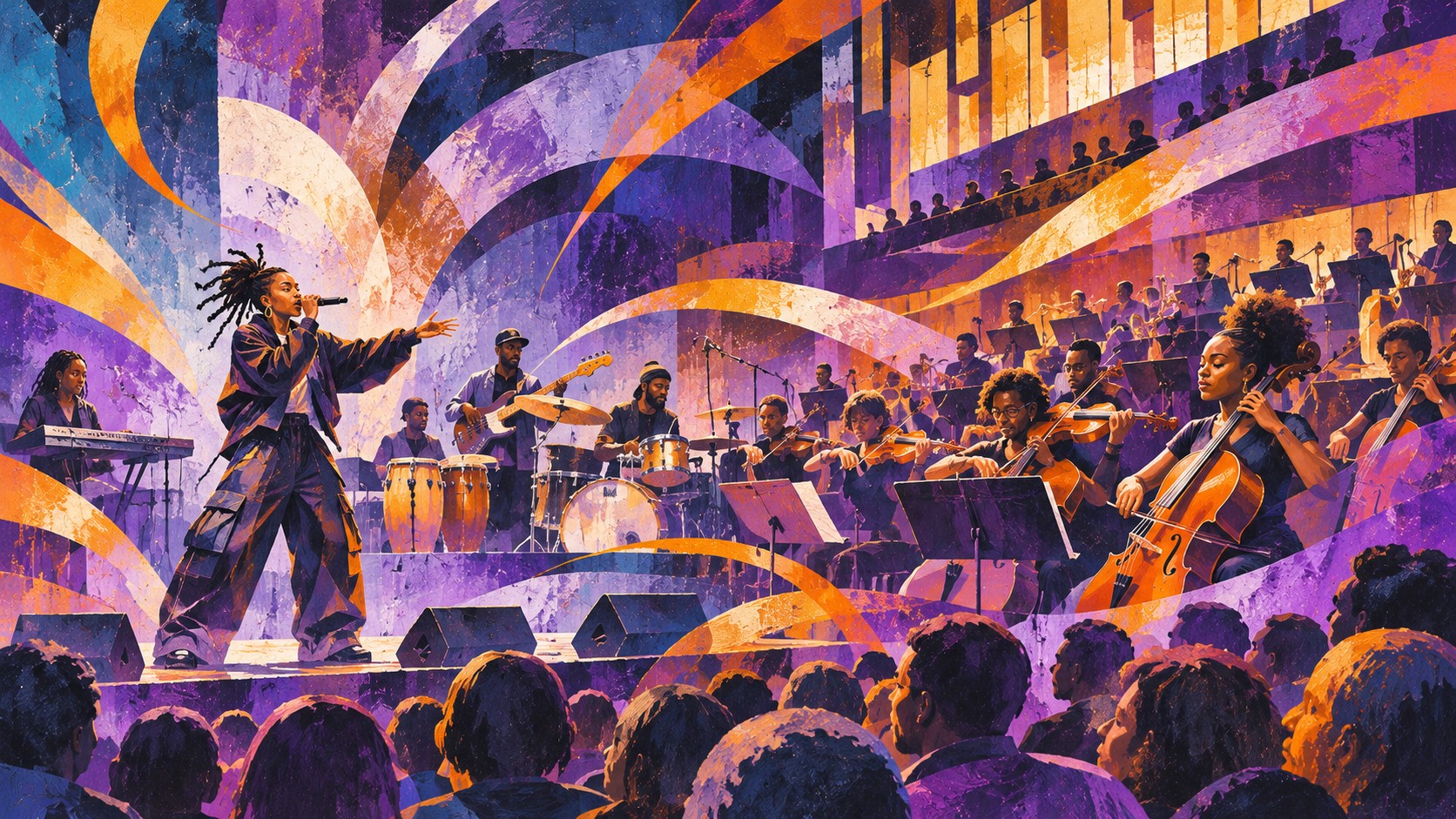
The change could be heard across Lotus: the jagged post-punk of Young, the bossa nova of Only, the Afrobeat of Lion, the stark vulnerability of Lonely. The record moved between sounds rather than reproducing one familiar formula.
That June, Simz also curated the Southbank Centre's eleven-day Meltdown festival. Its programme brought international artists together with grassroots performers and involved young London producers in shaping events in public spaces. She closed the festival at the Royal Festival Hall with Chineke! Orchestra, giving songs from her catalogue another form. The story that began with her uncertainty about making music outside one working arrangement had reached beyond her own recording sessions, into new collaborations and opportunities for others.
This is your launch point. This is the beginning of your own hero’s journey—one shaped not by escaping judgment, but by transcending the need for it, not for compliance or rebellion, but for authorship.
You carry this clarity into every conversation, every decision, every moment you face doubt. The shift unlocks tangible rewards.
Loosening habitual self-criticism can make room for calmer choices and more practical empathy. Instead of reacting immediately to someone’s behaviour, you may begin asking what context shaped it, creating space for genuine connection.
As a by-product, you may model this shift for others: a little more patience, clearer boundaries, and a willingness to understand before judging. Change can spread through such ordinary acts of self-determination.
Personal insight, when paired with healthy community feedback, becomes a co-creative process of truth-making. Conversations become more constructive. Creativity flows.
By choosing awareness over judgment, you light the path for others to follow, co-creating a society where clarity and empowerment are the shared norm.