The librarian who understood that collecting was not enough
Panizzi confronts a growing collection
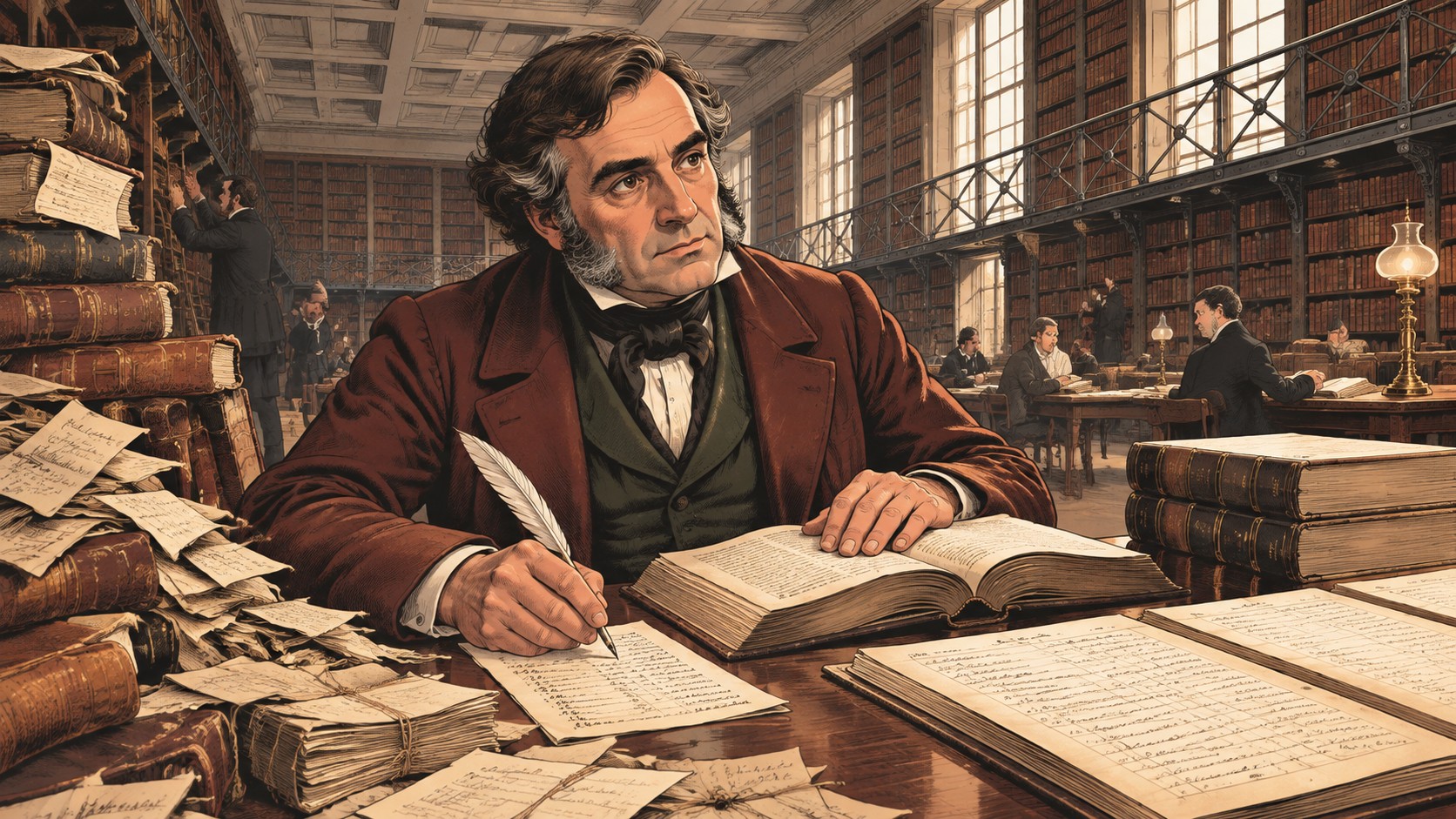
One of the most consequential figures in this story was Antonio Panizzi. Panizzi arrived at the British Museum in the nineteenth century and became central to its transformation as a research library. By then, the collections were growing rapidly.
The problem of finding a particular book

Finding a particular book was becoming an increasingly complex exercise. Panizzi understood that a vast collection without reliable organisation was only partly useful.
Ninety-one rules for a shared catalogue
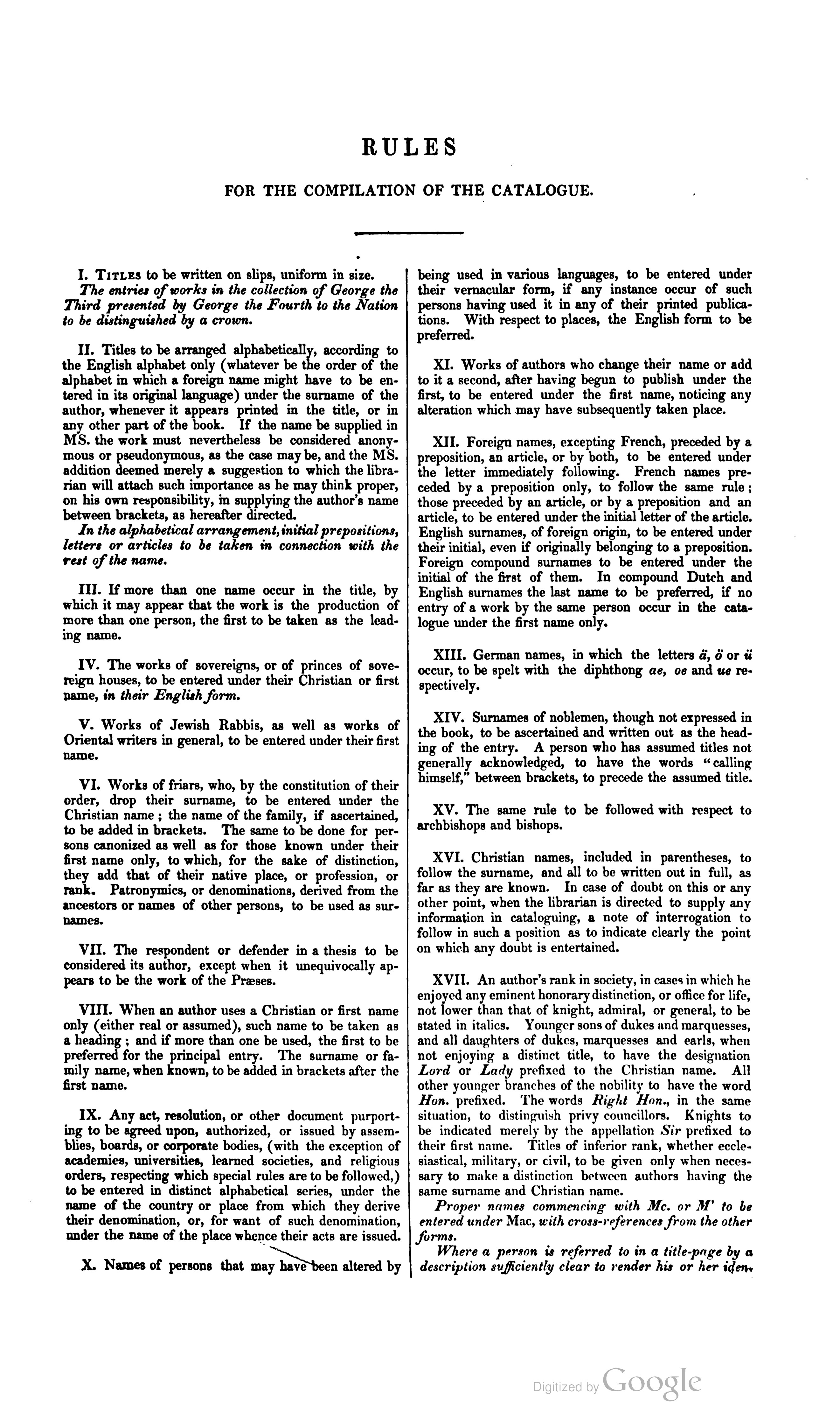
In 1839, he established 91 rules for cataloguing books. They were published in 1841. At first glance, this might seem like an administrative detail: a set of instructions about how librarians should describe and arrange catalogue entries. But its consequences were substantial. Consistent descriptions made it easier to find material across collections. Records could be interpreted more reliably by different people. Cataloguing became an organised professional practice rather than a series of isolated decisions. Panizzi was dealing with something bigger than the arrangement of books. He was developing infrastructure for finding knowledge.
A Reading Room, and an information system
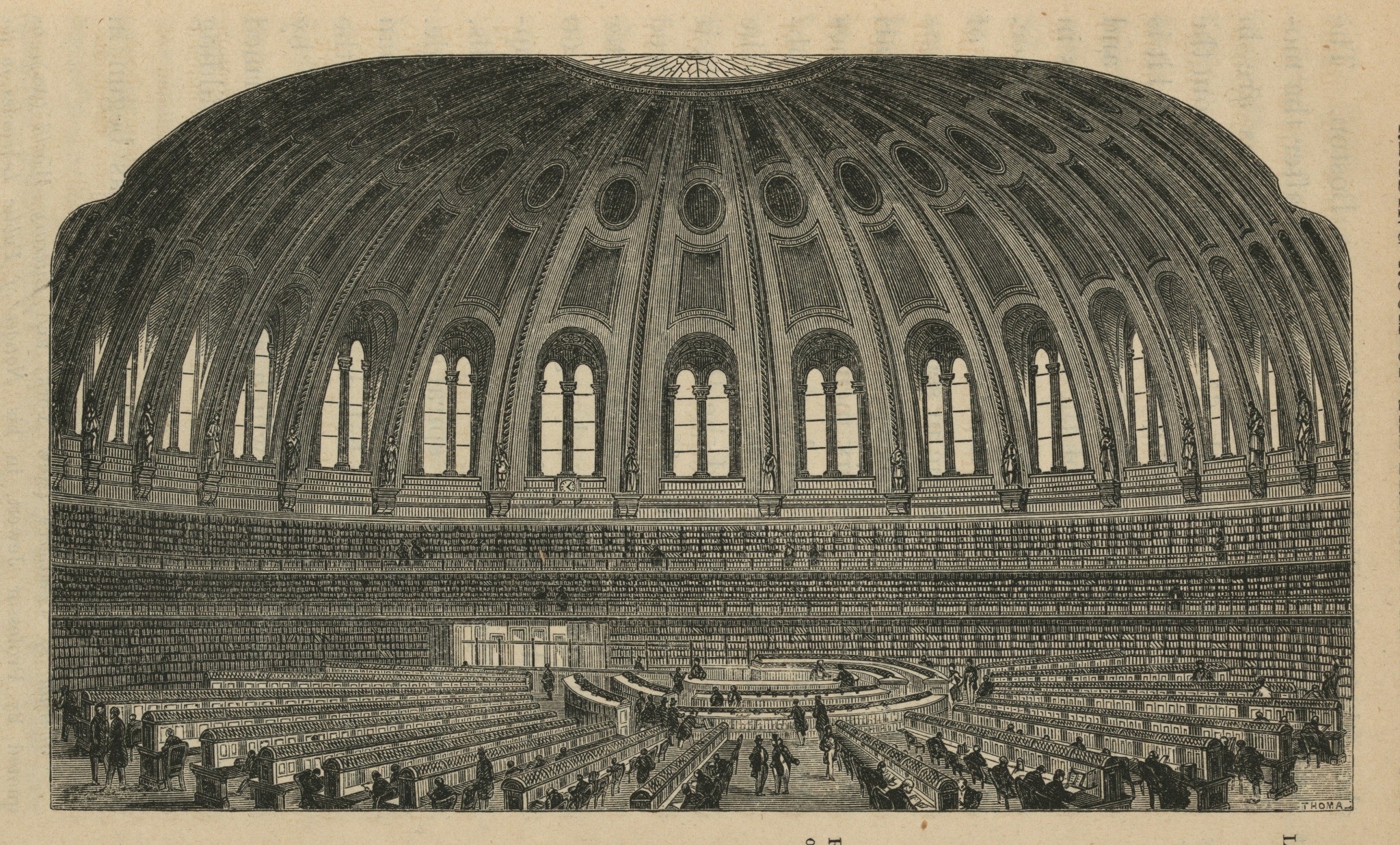
He also campaigned for better facilities and collection funding. In 1857, the British Museum's great domed Reading Room opened. It gave researchers a striking new environment in which to work and became one of the most recognisable intellectual spaces in London. But the building and the catalogue solved different problems. The Reading Room gave readers a place to work. Cataloguing helped them discover what they could work with. Neither, on its own, guaranteed unrestricted access. The library's development was becoming a continuing interaction between collections, information systems, physical space and the needs of readers.
Panizzi had helped readers find what the Library already held. But a different question was emerging: which forms of knowledge should a national collection preserve in the first place?
Image sources — Panizzi and the Reading Room
Image sources and credits: Antonio Panizzi and the catalogue-search scene: original Unset editorial illustrations (2026), interpretative reconstructions. Panizzi's cataloguing rules: British Museum, Catalogue of Printed Books (1841), public-domain print digitised by Google Books, https://books.google.com/books?id=OThAAAAAYAAJ&pg=PR5 . Reading Room engraving (1859): Library of Congress, LCCN 2007682650, no known publication restrictions, https://www.loc.gov/item/2007682650/ .